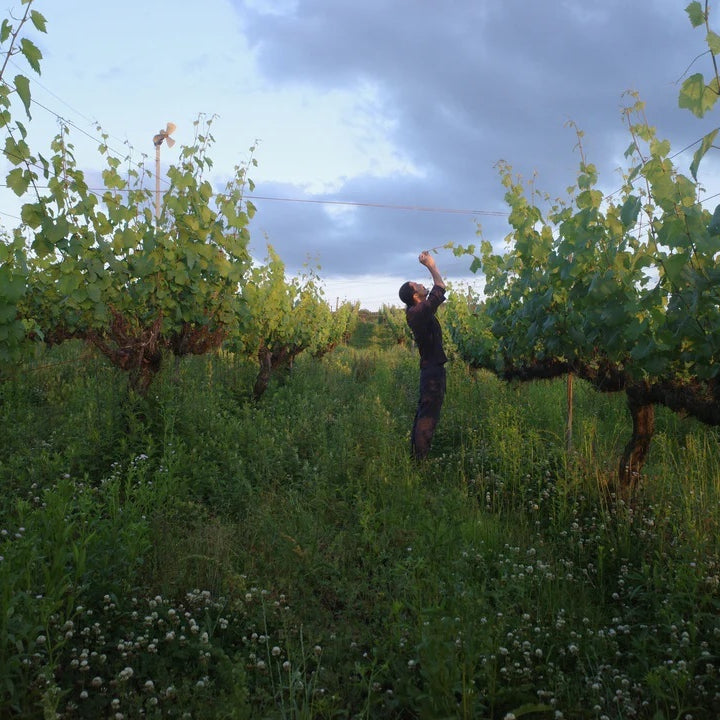

Kasai, Hyogo
“Botanical Life” is a winery based in Kasai City in the heart of the Banshu Plain, Hyogo Prefecture. Founded by Junpei Fukunaga and his wife Emi, it is rooted in a philosophy of coexistence with nature — cultivating grapes with minimal intervention and fermenting with wild yeast to express the land, climate, and year as purely as possible. Through both its wines and its gathering space, Botanical Life connects agriculture, culture, and community in Kasai.
Junpei Fukunaga and his wife Emi cultivate grapes every day in Kasai City, a town rich in nature located in the Banshu Plain in the middle of Hyogo Prefecture.
Junpei, whose hometown is Himeji City in the same prefecture, spent his 20s working at a factory while DJing as a hobby. One day, he came across a bottle of wine at a bakery in Nishinomiya. It was the wine of Marcel Lapierre, known as the father of French natural wine. From that moment, Junpei fell in love with the world of wine.
He learned that there were wineries in Japan producing natural wine and began visiting them himself. He was inspired by each winery’s philosophy and vision. While driving through Kasai City one day, he noticed a wide expanse of vineyards. In fact, Kasai was one of the largest grape-growing areas in Hyogo Prefecture.
Further coincidences followed, and he was offered a one-year internship with a table grape farmer. A year later, a small vineyard became available at exactly the right time. In 2014, Junpei decided to begin from the vineyard itself and started farming. After many twists and turns, he established his winery in 2021.
Junpei trained at several wineries across Japan while making wine on commission: Hitomi Winery (Shiga) in 2014–2015, COCO FARM & WINERY (Tochigi) in 2016, 10R Winery (Hokkaido) in 2017, and 98wines (Yamanashi) in 2020.
After seven years, just as he was finally able to make wine from his own land, he faced severe animal damage that wiped out all of his grapes. At that moment, he made a decision to start again from the beginning. While restoring the vineyards he had carefully tended for years, he vinified wine using purchased grapes. This led to relationships of trust with farmers in various regions and expanded the scope of his winemaking.
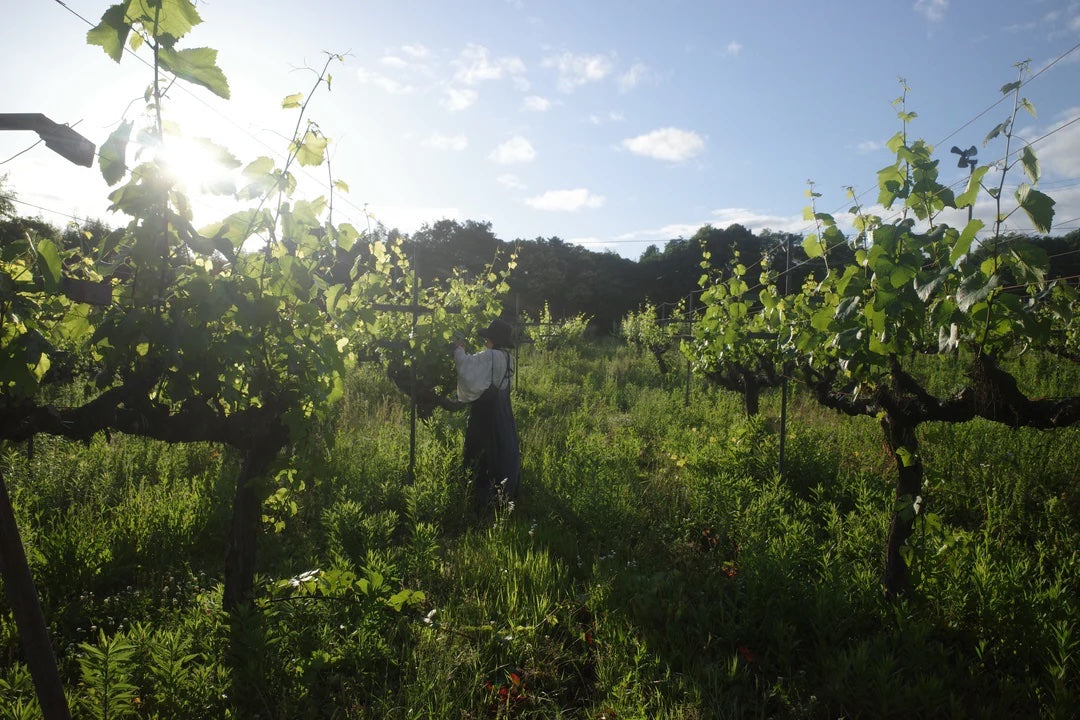
The region has a Setouchi-style climate with warm temperatures and long hours of sunshine throughout the year, making it a well-known grape-growing area. Although the altitude is below 200 meters, temperature differences between day and night occur in autumn during harvest season. The soil is red clay, rich in iron and minerals.
Junpei rented a 50–60-year-old Muscat Berry A vineyard and cultivated 0.7 hectares within the city, avoiding pesticides, including Bordeaux mixture, as much as possible.
On the occasion of his 10th year, he chose to return the leased vineyard and plant 1.2 hectares of new vineyard overlooking the sea of Awaji Island, beginning again from scratch.
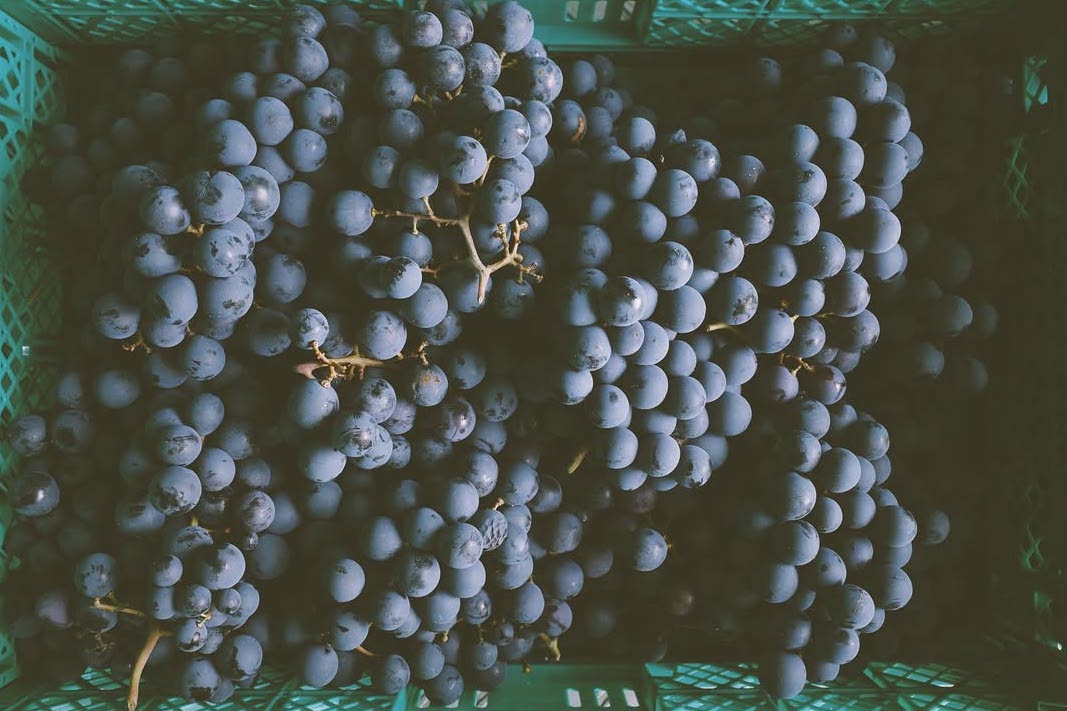
Red varieties include Muscat Baily A, Mourvedre, Syrah, Petit Verdot, Saperavi, and Gamay. White varieties include Koshu, Petit Manseng, Albariño, Romorantin, Sauvignon Blanc, and Red Myrlenium.
Junpei respects nature in his farming, avoiding pesticides, herbicides, and fertilizers as much as possible while carefully tending to the life of animals, insects, plants, and microorganisms living in the vineyard.
Junpei’s winery “uni” is located in the Uni district of Kasai City, Hyogo Prefecture, near the nature-rich Harima Central Park. He named it “uni” after the name of the area, envisioning it as a place where everyone can connect like family under one roof through winemaking.
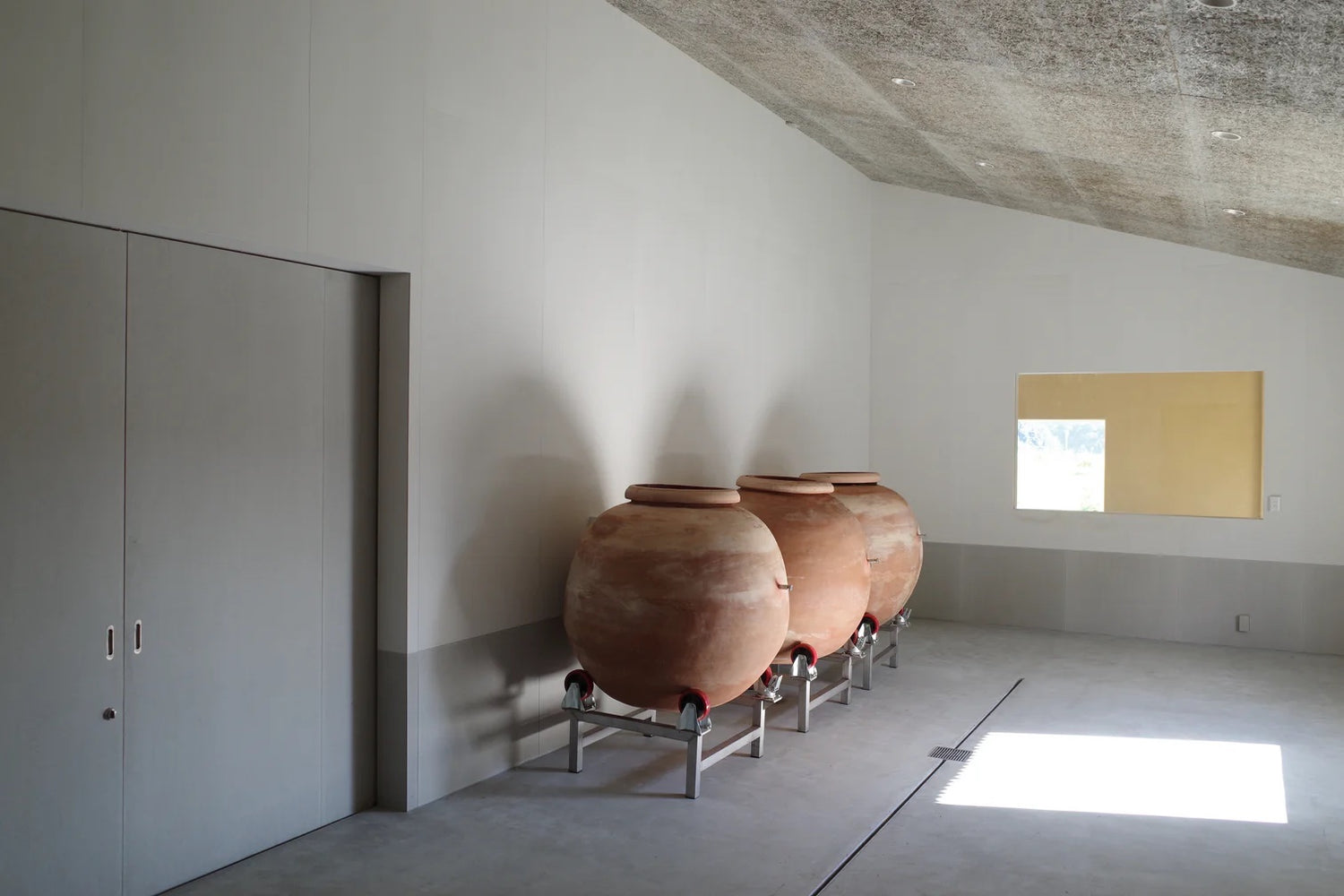
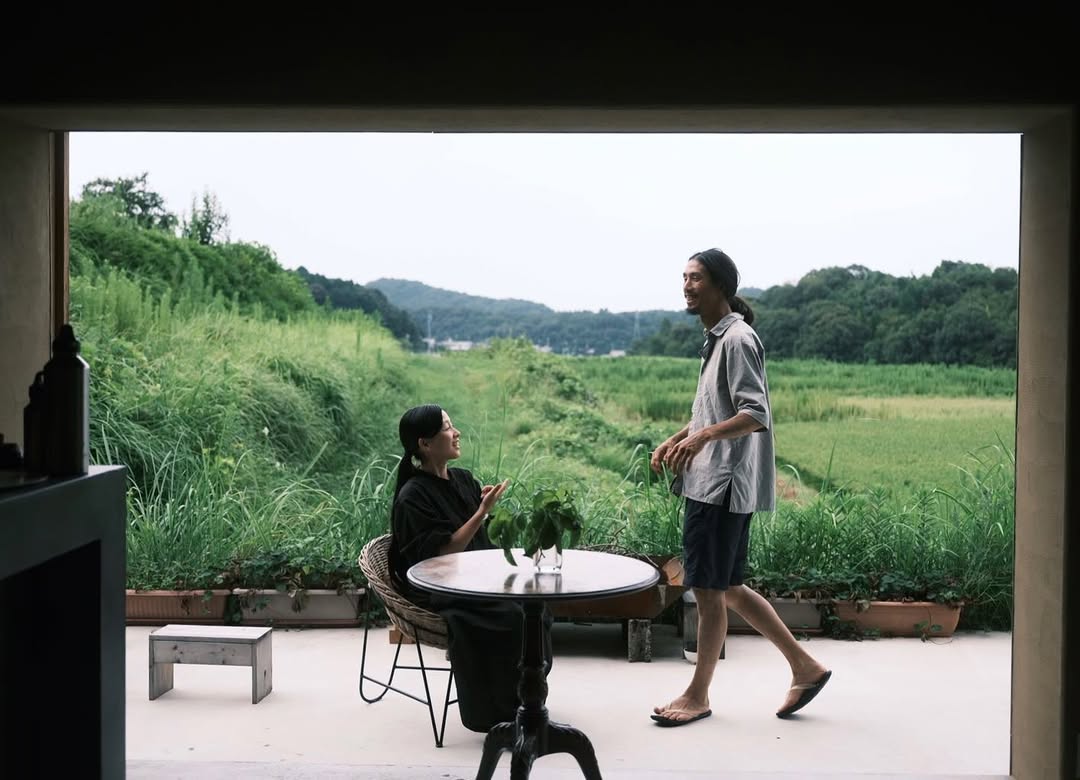
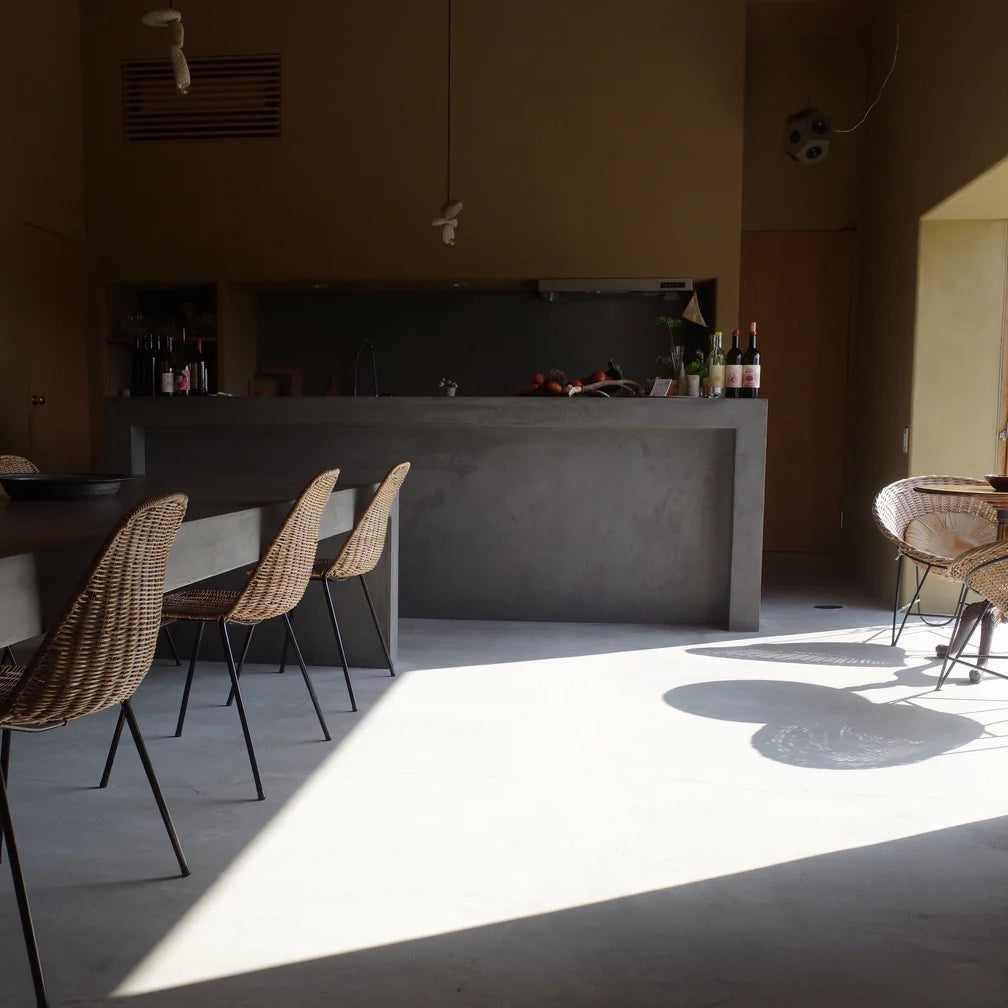
The building was originally used as a factory. Only the interior was renovated, leaving the exterior intact. The space includes a vinification room where grapes are welcomed, fermented, and stored, a kitchen and dining space for guests, and a store. From the kitchen and dining area, visitors can see the vineyards and countryside landscape, as well as the vinification room through a large glass window, allowing them to feel the beauty of nature and the joy of winemaking more closely.
This space functions not only as a winery but also as a place where people connect with one another and with nature through wine. It hosts dinner parties with invited chefs, exhibitions by artists of vessels and garments, and concerts by musicians.
Junpei uses wild yeast for fermentation, adds no sugar or acid, filters nothing, and uses as little sulfite as possible until bottling. Each bunch of grapes is carefully selected by hand. Instead of rough mechanical destemming, he gently destems by hand using a net he made himself.
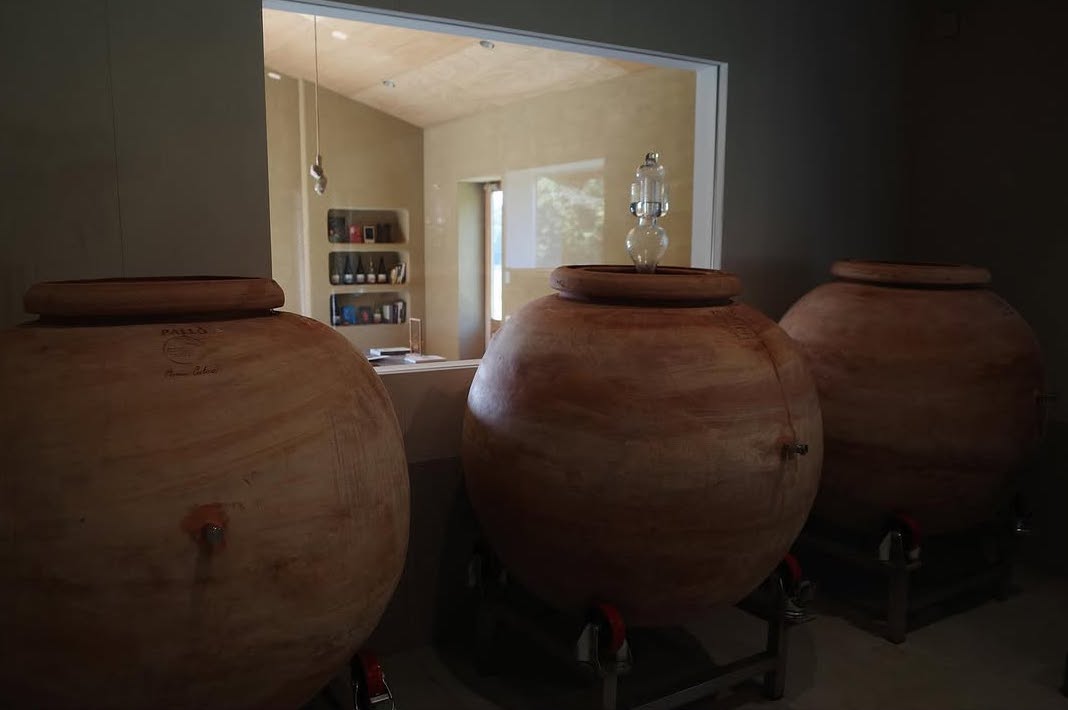
To minimize stress on the liquid, no pumps are used at any stage, including for pressed juice, which is moved entirely by gravity.
Fermentation and vinification are carried out in fiberglass tanks and amphoras, without actively using barrels or stainless steel. Every decision is made to express the land, the year the grapes spent, the fruit, and the microorganisms in the purest possible way.
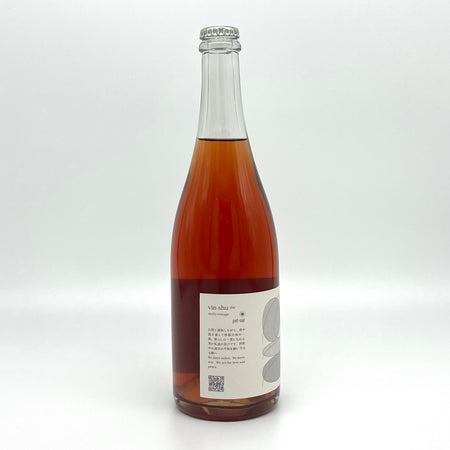
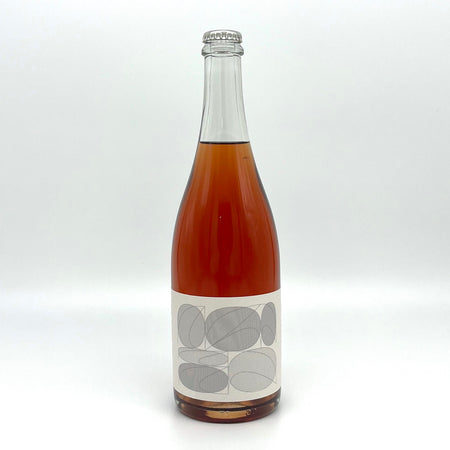
Junpei names the wines born from grapes nurtured in the climate of Banshu “vin shu.” The word “vin” derives from the French word for wine and also echoes the Japanese character 播, meaning to sow and spread seeds. “Shu” can mean gather(集), drink(酒), or region(州), all read as “shu.”
He named his wine “vin-shu” in the hope that wine sprouted from this land will naturally connect people beyond time and place, spread outward, and nurture a peaceful future.
“It is our pleasure to be a part of your body and your life through food and agriculture, in harmony with nature,” says Junpei.